
 Margin Pro
 Retail 365
 AI Operator
 Seller 365
 UniCon
 Onsite Support


 Blog
Blog How to spy on your competitors using Amazon Seller Search
Turn Amazon seller search into a competitive edge.


Your competitor just launched three new products last week. Another seller appeared on your bestselling ASIN with a lower price. A third brand is somehow getting 30 reviews per day.
Most Amazon sellers miss these moves completely, reacting only after they’ve lost sales. Smart sellers use Amazon seller search to track competitor moves before they happen, turning marketplace intelligence into profitable decisions.
Why Amazon seller search is your competitive edge
Amazon seller search goes far beyond finding someone to reorder from. When used strategically, it becomes your competitive intelligence system for tracking launches, monitoring pricing, and protecting your brand.
Basic seller lookup tells you who’s selling what. Strategic seller search tells you who to watch, what they’re planning, and how to respond. This creates three key advantages:
- Early trend detection lets you spot emerging opportunities before markets become saturated.
- Pricing intelligence keeps you competitive without constant manual monitoring.
- Supplier discovery reveals manufacturers selling direct who don’t advertise wholesale services.
Master Amazon seller search
Finding sellers requires different approaches depending on your starting information. Each method works better for specific situations.
5 proven methods to find any seller
- Product page lookup: Click “Sold by” information or brand name to access seller profiles. On mobile, tap “Visit the [Brand] Store.”
- Amazon search bar: Enter the seller’s exact name to get product listings, then use the first method. Works best with unique names.
- Direct storefront URL: Use amazon.com/shops/[storefrontname]. Replace with exact storefront name (may differ from seller name).
- Department filtering: Navigate “Shop by Department,” select a category, then filter by brand or seller in the sidebar.
- Seller ID search: Use URLs containing “seller=” followed by unique codes like A1B2C3D4E5F6G for consistent tracking.
Pro tip: Use seller IDs for consistent tracking
Every Amazon seller has a unique identifier that never changes, even when they rename their business. These appear in profile URLs as codes like A1B2C3D4E5F6G.
Why this matters: 15% of seller storefront names change annually due to rebranding or suspensions. Seller IDs ensure you maintain tracking even when sellers change their public-facing information.
Turn seller search into competitive intelligence
Systematic monitoring reveals patterns that drive profitable decisions. Follow structured routines rather than random checking.
1. Weekly competitor monitoring routines
Review your top 5-10 competitor storefronts weekly. Note new products, price changes, and promotional activity. Track review velocity – how quickly competitors accumulate reviews on new products.
Screenshot major changes for documentation. The goal is consistency, not complexity.
2. Tracking product launches and pricing moves
Set up regular storefront checks to spot new products before they gain search traction. Analyze launch patterns – do competitors test single products or launch multiple variations simultaneously?
Track pricing patterns, not just current prices. Some competitors adjust daily, others weekly. Understanding their schedules helps predict market movements.
3. Spotting market gaps and opportunities
Watch for category expansion signals when multiple competitors enter adjacent categories. This often indicates growing demand worth investigating.
Monitor inventory patterns and price positioning gaps. Review content analysis reveals unmet customer needs when multiple competitors receive similar complaints.
Protect your brand using seller search
Unauthorized sellers damage brand value through poor service, counterfeits, and price erosion. Systematic monitoring also identifies threats before they cause significant damage.
Find unauthorized sellers fast
Check each high-value ASIN regularly for new unauthorized sellers. Verify seller locations, feedback patterns, and inventory sources. Legitimate resellers have established businesses with consistent positive feedback.
Monitor for unusual pricing patterns – sellers offering products significantly below MAP often operate outside authorized channels.
Document IP violations effectively
Screenshot seller profiles, listings, and reviews mentioning authenticity concerns. Save seller IDs for permanent tracking even when sellers change names.
Document violation timelines and customer complaints about counterfeits or quality issues that damage brand reputation.
Use seller IDs to track persistent hijackers
Some unauthorized sellers return with new storefronts after enforcement. Seller IDs help identify persistent violators attempting to hide their identity.
Maintain historical records of violations by seller ID to strengthen future enforcement cases and demonstrate abuse patterns.
Automate competitor tracking with the right tools
Manual monitoring works for small operations, but scaling sellers need automated systems that run in the background.
FeedbackWhiz Alerts for real-time monitoring
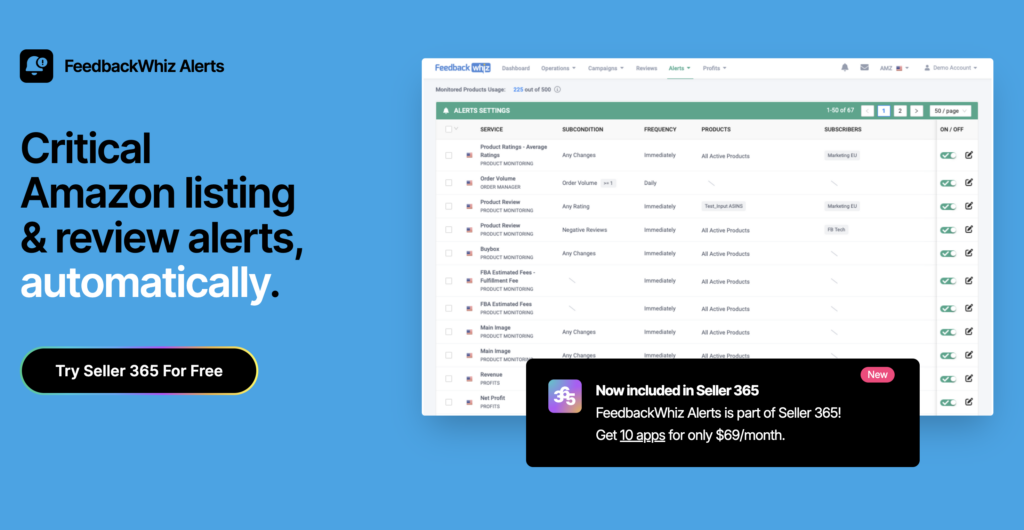
FeedbackWhiz Alerts can help you stay on top of both your listings and storefront and your competitors. Here are just some of the alerts you can set up:
- Buy Box tracking sends instant alerts when you lose position or competitors gain it.
- Listing change alerts notify you when competitors modify titles, descriptions, or pricing.
- Review monitoring tracks competitor review patterns, revealing successful launches or promotional campaigns.
- Hijacker detection alerts you immediately when unauthorized sellers appear.
Focus monitoring on 10-20 sellers who directly impact your business. Balance alert frequency as well—daily for critical competitors, weekly for broader market monitoring.
Set custom triggers for price movements, review velocity changes, or new launches based on what matters most to your business.
Automated systems like this capture changes you’d miss during manual reviews and maintain consistent historical records. This enables pattern recognition and team collaboration with centralized intelligence.
Your competitors won’t monitor themselves
Amazon seller search transforms reactive sellers into proactive strategists. While competitors focus on their own operations, you’re tracking their moves and identifying opportunities they miss.
Systematic competitive intelligence creates compounding advantages. You spot trends earlier, respond to threats faster, and discover opportunities reactive competitors never notice.
Fortunately, tools like FeedbackWhiz Alerts automate this monitoring advantage. Instead of manual weekly checks, you get real-time notifications when changes occur. Instead of discovering hijackers after damage, you know immediately.
Ready to transform competitor monitoring into systematic intelligence? Try Seller 365 free for up to 14 days and get FeedbackWhiz Alerts alongside 9 other seller apps. Start tracking the competitor moves that matter to your bottom line.