


 Blog
Blog Where profit slips: Hidden margin gaps in ecommerce.
Margin erosion rarely happens in one obvious place. It builds quietly. To recover those margins, understand where the gaps appear.

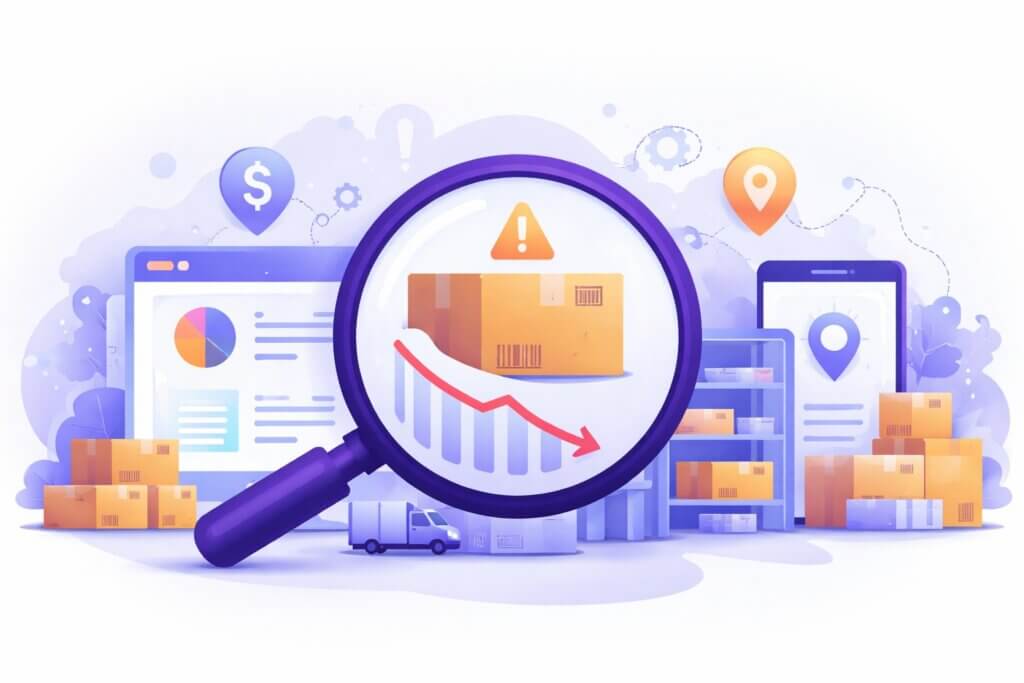
Most ecommerce teams have a good handle on their numbers. They track sales, watch their ad spend, and keep a close eye on margins.
But now and then, someone digs a little deeper and discovers something surprising: profit has been quietly slipping away.
Not because of one big mistake — but because of lots of small discrepancies across the supply chain.
Modern ecommerce is a volume game. Retailers, marketplaces, and carriers process millions of shipments and transactions every day. Their systems are highly automated and generally very accurate. But they’re not perfect.
During a recent webinar with Intentwise, I talked about how margin erosion rarely happens in one obvious place. It builds quietly across marketplaces, carriers, and operational blind spots.
If you want to recover those margins, it helps to understand where those gaps appear.
Where margin leakage usually shows up.
In our experience, margin leakage shows up in three areas:
- retail and wholesale relationships
- marketplace fulfillment networks
- direct-to-consumer shipping
Each of these environments works at a massive scale, which means small errors can compound over time.
Let’s take a look at how that plays out.
Retail and wholesale relationships.
If you sell through large retailers, deductions and compliance penalties are simply part of the business.
Retailers rely on these charges to keep their supply chains running smoothly. If shipments arrive late, packaging isn’t compliant, or data isn’t transmitted correctly, retailers impose fees to enforce their standards.
But here’s where scale comes into play.
Retailers process millions of shipments and invoices through automated systems. And in any high-volume environment, errors happen. For example:
- a chargeback applied to the wrong shipment
- a duplicate deduction
- a shortage recorded even though you sent a full shipment
On their own, these issues might be small.
But when they happen repeatedly across hundreds or thousands of transactions, they can add up faster than most teams realize.
In one example we discusses during the webinar, a vendor sent over 200 units, but the retailer initially recorded receiving far fewer, putting a significant amount of revenue at risk until we investigated and resolved the discrepency.
Marketplace fulfillment operations.
Marketplace fulfillment networks add another layer of complexity.
Inventory may move through multiple warehouses, receiving stations, and internal transfers before it ever reaches the customer. These systems handle enormous amounts of inventory every day, which means they’re optimized for efficiency and automation.
Most of the time, everything works exactly as expected.
But occasionally, there are mistakes in the process. For example:
- units recorded incorrectly during receiving
- items misplaced during warehouse transfers
- inventory damaged or lost during internal movement
These issues usually involve small quantities of inventory, but when they occur across large shipment volumes, the financial impact can grow.
In the webinar, I described one example where several thousand units that moved internally between facilities were recorded as only partially received — despite staying within the same network. We managed to recover the sellers’ missing revenue after investigating the error.
Situations like that aren’t unusual in complex fulfillment networks, which is why it’s crucial to continuously review fulfillment data to make sure inventory records match reality.
Direct-to-consumer shipping.
Even brands that manage their own fulfillment operations can see margin slip once packages leave the warehouse.
Shipping contracts and carrier operations introduce their own set of variables, including:
- negotiated parcel rates
- accessorial fees and surcharges
- delivery service guarantees
Many brands assume their carrier agreements are competitive because they’ve been offered discounts.
Carrier reps are measured on delivering profitable accounts to the carrier, not on saving you money.
That doesn’t mean carriers are doing anything wrong. It just means their incentives are different.
For high-volume shippers, even small inefficiencies in parcel agreements can quietly increase costs over thousands of deliveries. For example, accessorial fees or surcharges that don’t look significant on a single shipment but are added consistently across your order volume could be negotiated down.
Why these issues often go unnoticed.
One of the biggest challenges with margin leakage is visibility.
Once products leave your warehouse, you’re relying on systems run by retailers, marketplaces, and carriers. Most of the time, those systems work well — but they also operate across extremely large volumes of transactions.
In practice, all we can see is what the retailer, carrier, or customer tells us. Without the right mechanisms in place, that creates major blind spots.
Because each discrepancy is usually small, they’re easy to miss in the day-to-day rhythm of running a business.
But across thousands of orders, shipments, and invoices, those small discrepancies can quietly add up.
How brands typically approach the problem.
When brands start looking more closely at margin leakage, they usually begin with auditing and recovery, then use what they learn to improve prevention.
Audit and recovery
The first step is reviewing operational data to make sure shipments, inventory records, and financial transactions actually line up.
This might include:
- comparing shipments with retailer receiving records
- reviewing deductions and compliance chargebacks
- reconciling inventory movements across fulfillment networks
The goal isn’t to assume anything is wrong — it’s simply to verify that the records match what actually happened in the supply chain.
When you find errors, the next step is to investigate and recover the money you’re owed, whether that’s a deduction tied to the wrong shipment or inventory that was delivered but not fully recognized.
You don’t want to guess where margin leakage is happening. The right approach is to audit the data and let it tell you where the problems are.
When we audit operational data across thousands of transactions, we often uncover discrepancies that would otherwise go unnoticed. Even minor errors add up to meaningful amounts of recoverable revenue.
Prevention
Once those discrepancies are identified and addressed, the next step is to use the insights to prevent as many issues as possible.
For example, teams might:
- tighten retailer compliance procedures
- adjust logistics workflows that trigger recurring deductions
- improve shipment documentation and record keeping
- renegotiate carrier agreements
That combination of reconciliation, recovery, and operational improvements helps brands reduce margin leakage while strengthening the processes behind their supply chains.
Want to dive deeper?
In the webinar hosted by Intentwise and Threecolts, I walked through several real examples of where margin leakage shows up in ecommerce supply chains and how brands recover that revenue.
If you’d like to explore the topic in more detail, you can watch the full discussion below.
Watch the full webinar
Where profit slips: Exposing margin gaps in modern ecommerce
Final thoughts.
For most ecommerce businesses, margin doesn’t disappear because of one big operational failure.
More often, it slips away through lots of small discrepancies across a complex supply chain.
Individually, those issues seem insignificant.
But across thousands of shipments and transactions, they can add up. That’s why many brands are starting to take a closer look at the operational side of profitability.
Understanding where profit slips is often the first step toward keeping more of it.