
 Margin Pro
 UniCon
 Seller 365
 Onsite Support
 AI Operator
 Retail 365


 Blog
Blog Trump tariffs are reshaping ecommerce: Winners and losers in the current landscape
Threecolts CEO Yoda Yee analyzes the impact of Trump tariffs based on data from Threecolts, Marketplace Pulse, and discussions with sellers.

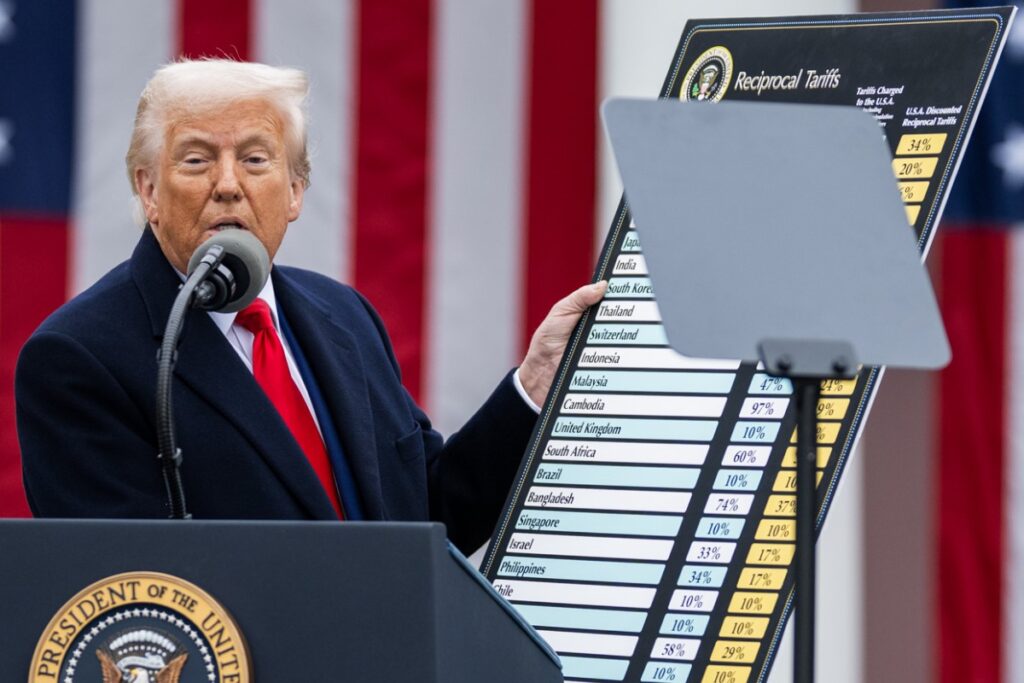
I’ve spent the past week analyzing the impact of the new Trump tariffs on our ecommerce ecosystem. This analysis combines quantitative data from Threecolts and Marketplace Pulse with insights from dozens of customer conversations across multiple market segments. Here’s what we’re seeing on the ground.
Large brands: Very unhappy but absorbing costs and maintaining focus
The major players are absorbing tariff costs while keeping their focus on EBITDA optimization. With substantial cash reserves and diversified supply chains, these companies can navigate the immediate challenges while strategically adjusting their long-term sourcing approach. Many have been moving production outside of China in anticipation for this trade war.
Large brands are also leveraging their scale to negotiate with suppliers and selectively passing costs to consumers where market conditions allow. While not ideal, their financial resources provide significant resilience through this transition. We’ve found that dozens of large brands (such as Anker) have already increased their Amazon prices on camelcamelcamel.com.
Small brands / private labels: Facing a severe cash crunch
For small brands and private label businesses, the situation has quickly become dire. These operations typically function on a production line by production line budget, with the majority of their capital invested in inventory.
What makes this particularly devastating is the timing of the tariffs. Many sellers have inventory currently in transit that they’ve already depleted cash reserves to purchase. Now, as these shipments arrive at US ports, they’re being hit with over 100%+ tariffs—an expense they hadn’t budgeted for and simply don’t have the liquidity to cover.
This creates a perfect storm: their capital is tied up in products they can’t afford to bring into the country, yet they can’t raise prices on inventory they don’t physically possess. Even with price increases, the immediate cash requirement for clearing customs exceeds what many of these businesses can access on short notice.
They’re facing impossible choices:
- Scramble for emergency capital to clear customs (often at predatory interest rates)
- Maintain pricing on existing inventory and accept severely compressed margins
- Raise prices and risk losing market share (if they can get their inventory at all)
- Abandon shipments they can’t afford to clear (losing both product and initial investment)
This segment appears most vulnerable in the current environment, and we’re already seeing signs of significant pressure escalating into existential threats for many of these businesses.
Large resellers: Protected margins, inventory challenges
Larger reselling operations face a mixed outlook. Their percentage-based margin models (buying at X, selling at X+Y%) provide some natural insulation from profitability impacts. However, they’re increasingly concerned about inventory availability.
As brands pause or reduce orders in China, these resellers are sharing that they expect it to become difficult to maintain consistent inventory levels. While their fundamental business model remains sound, growth trajectories may be impacted in the near-term.
Small resellers / arbitrageurs: Finding opportunity in disruption
Interestingly, nimble arbitrage operators stand to benefit from the current market disruption. The uneven implementation of tariff-related price adjustments is creating significant pricing imbalances across marketplaces.
For businesses specialized in identifying and capitalizing on these pricing discrepancies, the current environment offers expanded opportunities. The more chaotic the pricing landscape, the more potential arbitrage scenarios emerge. We’re already seeing an uptick in Tactical Arbitrage usage.
Adaptation through technology
What’s particularly interesting is how businesses across different segments are turning to technology solutions to navigate this challenging environment:
- Large brands are leaving no stone unturned when it comes to margin improvement, increasingly leveraging margin intelligence platforms like Margin Pro to identify every possible efficiency. These solutions are helping them uncover hidden costs, optimize pricing strategies, and maximize profitability on a per-SKU basis. What was once considered a nice-to-have has rapidly evolved into critical infrastructure as brands fight to protect EBITDA in an environment where every percentage point matters.
- Small arbitrageurs are adopting sophisticated arbitrage scanning technology like Tactical Arbitrage to quickly identify and capitalize on the pricing inefficiencies created by uneven tariff implementation. With the right tools, these operators can detect emerging opportunities across marketplaces in real time, allowing them to move faster than manual scanning could ever permit.
This acceleration of technology adoption isn’t surprising, but the speed at which it’s happening suggests businesses recognize that traditional approaches to pricing and opportunity identification simply can’t keep pace with today’s rapidly changing market conditions.
Manufacturing side effects: Early payment demands
We’re receiving consistent reports that Chinese manufacturers are increasingly demanding early payments from their customers. This unusual shift in payment terms indicates significant upstream pressure, likely stemming from a wave of canceled or reduced orders following the tariff implementation.
This development reveals how deeply these policy changes are affecting the entire supply chain, not just US-based sellers.
Supply chain shifts
The tariff impacts are already driving significant changes in manufacturing strategies. Both large brands and small sellers are rapidly evaluating production alternatives outside of China, with particular interest in Southeast Asian countries like Vietnam and Cambodia.
Other emerging manufacturing destinations include Mexico (benefiting from proximity to the US market), India, Bangladesh, and even parts of Eastern Europe. For larger brands with established supply chains, this transition may be manageable, though not without challenges.
For smaller sellers, however, this pivot requires establishing entirely new supplier relationships, navigating unfamiliar regulatory environments, and managing quality control across new production facilities—all requiring capital they’re already struggling to access.
Looking ahead
Based on current trends, I predict several market shifts in the near-term:
- Accelerated consolidation in the small brand / private label space, with many businesses unable to survive the immediate cash demands
- Increased investment in supply chain diversification beyond China, particularly to Southeast Asia
- Growth of arbitrage operations capitalizing on market inefficiencies
- Rising demand for margin optimization tools and strategies
- Uneven consumer price adjustments across product categories
- Extended inventory shortages as supply chains reconfigure
The full impact of these tariffs will continue to evolve in the coming months. Understanding these structural shifts will be crucial for positioning your business effectively in this changing landscape.
I’ll continue monitoring these developments and share updates as the situation progresses.
About Threecolts
Threecolts builds technology solutions that help ecommerce businesses optimize their operations and profitability. Threecolts is already trusted by hundreds of enterprise vendors and thousands of small sellers. Our suite of products is uniquely positioned to support companies navigating the current tariff environment:
For EBITDA-focused enterprises: Our Margin Pro platform (trusted by Fortune 500 companies and large private companies) provides comprehensive margin intelligence that helps large brands identify efficiency opportunities and protect profitability in challenging market conditions. As companies face increasing pressure on margins due to tariffs, Margin Pro delivers the visibility and actionable insights needed to make strategic decisions across thousands of SKUs.
For arbitrage operators: Seller 365 enables small resellers to quickly identify and capitalize on the pricing inefficiencies created by uneven tariff implementation. Our technology allows these nimble operators to scan across marketplaces in real time, discovering opportunities that would be impossible to find manually.
As the ecommerce landscape continues to evolve in response to these tariffs, our solutions are helping businesses not just survive but thrive by turning market challenges into strategic advantages. Learn more at Threecolts.com.
—
*This analysis is based on data collected over the past week through both quantitative research at Threecolts and Marketplace Pulse, as well as dozens of direct customer interviews across different market segments. While the situation continues to evolve, these insights represent our current understanding of the emerging market dynamics as of Q2 2025.*