
 Margin Pro
 Retail 365
 AI Operator
 Seller 365
 UniCon
 Onsite Support


 Blog
Blog What is an Amazon fulfillment center & how does it work?
Here’s how Amazon fulfillment centers work and how sellers can use them to scale profitably.

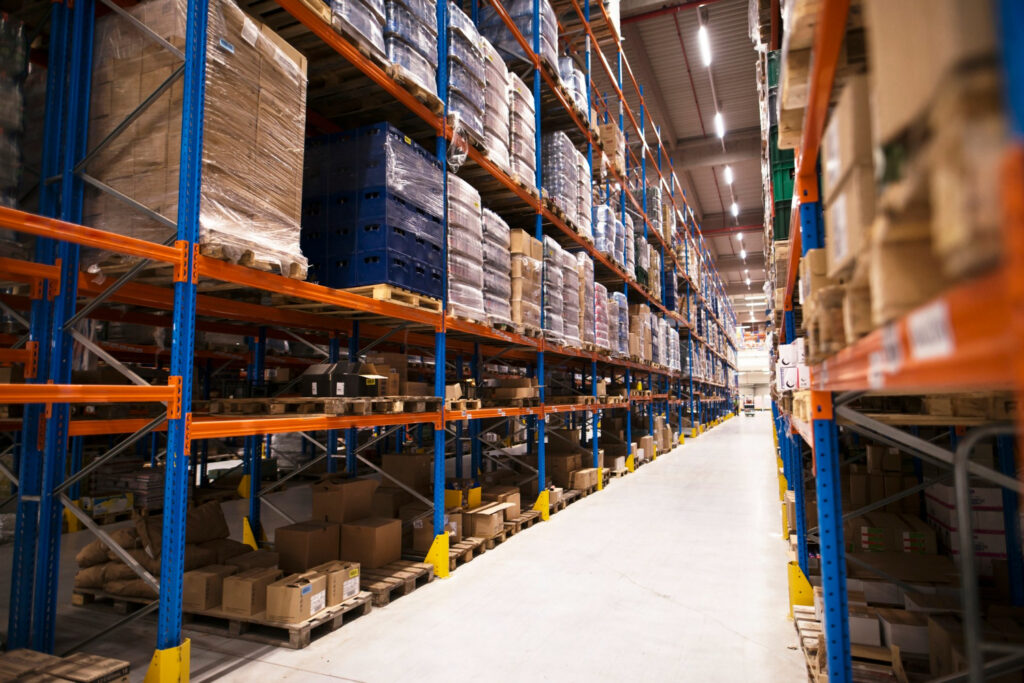
Ever clicked “Buy Now” on Amazon and wondered how that package magically appears at your door the next day? Behind this seemingly supernatural feat stands Amazon’s fulfillment center network. Massive warehouses that make the impossible possible.
Amazon fulfillment centers are giant logistics warehouses where Amazon handles storing, processing, picking, packing, and shipping products for sellers using the FBA program. Picture a small city of conveyor belts, robots, and workers.
When you use these fulfillment centers as a seller, Amazon essentially becomes your warehouse team, shipping department, and customer service desk rolled into one. You focus on finding great products and growing your business while Amazon handles the rest. But squeezing the most profit from this relationship requires understanding what’s happening behind those warehouse doors.
Don’t feel like reading? Listen to this article in our podcast, Commerce Decoded.
What does an Amazon fulfillment center do?
Amazon fulfillment centers handle five core functions:
- receiving inventory from sellers
- storing products in strategic locations
- picking items when orders come in
- packing products safely for travel
- shipping packages to eager customers
Traditional warehouses just store stuff. Amazon’s fulfillment centers are constantly in motion. Products arrive, move to storage, get picked, packed, and shipped in a continuous flow that never stops.
They’re also equipped to handle returns. This makes them comprehensive logistics hubs rather than simple storage facilities.
How Amazon fulfillment centers work
The journey of your product through an Amazon fulfillment center follows a path designed to minimize touches and maximize speed. Knowing this process helps you prepare inventory properly and avoid costly mistakes.
Everything starts with receiving, where your inventory arrives and enters the Amazon ecosystem. Items get scanned, inspected, and digitally logged before heading to their temporary home in storage.
Amazon doesn’t organize by category. They use a “chaotic storage” system where products go wherever space is available. Then, they’ll be tracked by computer for instant retrieval later.
When a customer orders your product, Amazon’s system springs into action. It identifies the closest fulfillment center with your item in stock, and either robots or workers retrieve it from its storage location. The system creates optimized picking routes to save time.
Your product then moves to packing, where it gets the right box and protective materials before receiving its shipping label. Packages get sorted based on destination and delivery speed promised to the customer. Finally, they’re loaded onto trucks for handoff to Amazon Logistics, USPS, UPS, FedEx, or other delivery partners who complete the journey to the customer’s door.
Amazon operates different types of fulfillment centers specialized for specific products. Sortable centers handle smaller items like books and gadgets, while non-sortable facilities manage bulky things like furniture. The network also includes sortation centers that group packages by destination, receive centers that process bulk shipments, delivery stations that prep for final delivery, and same-day sites that serve major cities with lightning-fast shipping.
Nowadays, this entire operation runs on technology. Barcode scans track each item’s journey, inventory software updates in real-time, robots transport heavy loads, and AI algorithms constantly optimize everything from storage locations to shipping routes.
Amazon fulfillment center costs
Now, let’s talk money. Specifically, how much Amazon charges you for their fulfillment magic.
Fulfillment fees form the foundation of FBA costs. These per-unit charges cover picking, packing, shipping, and customer service. As of writing this article, small to large standard items (4 oz to 20 lb) cost $3.06 to $6.92 to fulfill (with $0.08 added per 4 oz above 3 lb). Meanwhile, large bulky items start at $9.61 plus $0.38 per pound above the first pound. The bigger and heavier your product, the more you’ll pay.
Then come storage fees, calculated by how much space your inventory occupies in cubic feet. Non-dangerous goods cost $0.78 to $2.66 per cubic foot from January through September, but jump dramatically to $2.43+ during the October-December holiday rush.
Unfortunately, many sellers focus on these obvious costs while missing the sneaky fees that can eat away profits.
- Dimensional weight calculations often make lightweight but bulky items surprisingly expensive to ship.
- Holiday storage rates triple normal costs.
- Storage utilization surcharges penalize inventory that sits too long.
- Aged inventory fees increase the longer your products remain unsold.
Other commonly overlooked expenses include inbound placement fees when Amazon distributes your inventory across multiple centers, returns processing charges, and removal fees when you need to extract inventory from the Amazon system. Tracking all these costs requires vigilance and good bookkeeping.
Amazon’s fulfillment network
Amazon’s fulfillment network spans continents. Though there’s no publicized official number, the company claims to operate hundreds of fulfillment facilities worldwide, with over 100 located in the United States alone.
This massive infrastructure represents billions of investment since FBA launched in 2006. Beyond traditional fulfillment centers, the network includes sortation centers, receive centers, delivery stations, air hubs, same-day facilities, and specialty buildings for handling returns or seasonal overflow. It’s essentially a private shipping empire bigger than many national postal services.
Amazon tailors its fulfillment centers to handle specific types of products and functions. Sortable centers cover 800,000+ square feet each and process smaller items through highly automated systems. Non-sortable facilities span 600,000 to 1 million square feet and manage bulkier products that need more manual handling.
Supporting these main centers are sortation facilities that organize packages by destination, receive centers that redistribute bulk shipments, delivery stations that prepare packages for final delivery, and specialty buildings for unique needs. The newest additions are same-day fulfillment sites located near major cities to enable ultra-fast shipping options.
Amazon recently transformed its approach from a national model to eight self-sufficient U.S. regions. Each region now carries a comprehensive inventory, allowing most orders to be fulfilled locally. This shift means over 76% of packages now travel shorter distances. This reduces both delivery times and transportation costs while improving the customer experience.
Tips for making the most of Amazon fulfillment centers
Tip #1: Understand Amazon’s inventory placement service to reduce split shipments
Amazon loves to scatter your inventory across multiple fulfillment centers through its default Distributed Inventory Placement system. An alternative, Inventory Placement Service (IPS), lets you send everything to one center, and Amazon handles redistribution.
IPS simplifies your shipping process but adds per-unit fees based on product size and weight. Use it selectively for new product launches with small initial quantities or high-margin items where the convenience justifies the extra cost.
Another clever approach: partner with prep centers or 3PLs who understand Amazon’s system and can optimize your shipments before they enter the Amazon network. This will potentially save you both IPS fees and shipping costs.
Tip #2: Avoid common shipping mistakes like improper labeling or missing documentation
Shipping mistakes to Amazon are expensive time-wasters that can delay your inventory for weeks. Missing FNSKU labels, incorrect box contents declarations, non-compliant packaging, or forgotten freight appointments can derail your carefully planned inventory strategy.
When Amazon encounters these issues, they might refuse your shipment or charge per-unit correction fees. Repeated problems can damage your Inventory Performance Index and restrict your storage allowance. Keep a proper label printer, scale, and measuring tools handy. Always double-check box weights and dimensions in Seller Central before shipping.
Tip #3: Use sales forecasting to determine optimal inventory levels at each center
Inventory forecasting is the greatest challenge of Amazon selling. Too little means lost sales, too much means excessive storage fees. Amazon’s Restock Inventory Tool provides basic guidance based on your sales velocity and seasonality patterns, but it’s usually not enough. You can supplement these recommendations with specialized tools like InventoryLab.
Final thoughts
Amazon’s fulfillment centers represent logistics engineering at its finest. It’s a brilliant combination of cutting-edge technology and strategic human oversight that delivers millions of packages daily. For sellers, these facilities offer the ability to scale your business without leasing warehouse space, hiring shipping staff, or building customer service teams.
But success with Amazon fulfillment requires a strategic approach. You have to forecast accurately, ship efficiently, and monitor your metrics religiously. The most profitable sellers aren’t just passive users of the fulfillment network. They’re active managers who optimize their inventory placement, shipping methods, and product selection to work harmoniously with Amazon’s systems.
Ready to take control of your Amazon fulfillment strategy? Check out Seller 365 and its inventory management app designed specifically for FBA sellers. With powerful features for forecasting and cost tracking, you’ll have everything needed to navigate Amazon’s fulfillment center network like a pro and keep more of your hard-earned profits. Plus, you get 9 more apps for the price of one!
Try Seller 365 free for up to 14 days today.
FAQs about Amazon fulfillment centers
Amazon places fulfillment centers strategically near metropolitan areas, along major highways, and close to transportation hubs. These include ports, airports, and railways. Most facilities (over 100) are in the United States, with additional centers throughout Europe, Asia, and other international markets supporting Amazon’s global operation.
Amazon’s largest fulfillment centers exceed one million square feet—roughly the size of 28 football fields placed side by side. Notable megacenters operate in metropolitan areas like San Bernardino (California), Dallas/Fort Worth (Texas), and Allentown (Pennsylvania). They serve as crucial hubs in Amazon’s regionalized delivery network.