

 Margin Pro
 Retail 365
 AI Operator
 Seller 365
 UniCon
 Onsite Support


 Blog
Blog Amazon competitor analysis guide for FBA sellers
Your competitors already know your next move… unless you study theirs first. Here’s how FBA sellers stay ahead with smarter analysis.


Every month, thousands of FBA sellers watch their sales plummet as competitors swoop in with better listings, smarter pricing, and superior keyword strategies. They’re left wondering what hit them—and more importantly, how to fight back.
The difference between thriving sellers and struggling ones isn’t luck or better products. It’s intelligence. Successful FBA sellers know exactly who they’re competing against, what those competitors are doing, and how to outmaneuver them at every turn.
Instead of reacting to market changes after they’ve already cost you sales, you can anticipate moves, capitalize on gaps, and consistently stay one step ahead of the competition. Here’s how FBA sellers can conduct competitor analysis.
What is Amazon competitor analysis?
Amazon competitor analysis means systematically studying other sellers who target the same customers you do. This process involves identifying who your real competitors are, then dissecting their product listings, pricing strategies, keyword targeting, customer reviews, and advertising tactics.
Think beyond just products that look similar to yours. Your competition includes anyone fighting for the same search terms, targeting identical customer needs, or appearing in related Amazon sections like “Customers Also Viewed” and “Frequently Bought Together.”
The stakes on Amazon make this research essential. Every competitor’s move affects your Buy Box eligibility, search rankings, and profit margins. Miss a competitor’s price drop, and you lose sales overnight. Ignore their keyword strategy, and your organic visibility vanishes.
Why competitor analysis drives FBA success
Smart competitor research directly impacts your bottom line through better pricing decisions. When you understand how competitors position themselves—premium, budget, or value-focused—you can price strategically instead of guessing. This knowledge prevents devastating race-to-the-bottom scenarios while identifying opportunities to capture higher margins.
Keyword gaps become profit opportunities when you spot high-volume search terms your competitors rank for but you don’t. These discoveries can instantly boost your organic visibility and drive qualified traffic to your listings.
Customer complaints in competitor reviews also reveal exactly what the market wants but isn’t getting. These insights guide product improvements, listing optimizations, and messaging that directly address unmet needs. Your solution to their problems becomes your competitive advantage.
How to find and identify your Amazon competitors
Start with Amazon’s search bar using your primary keywords—both broad terms and long-tail variations. The products appearing on the first page of results are your most direct competitors for those search terms.
Remember: Direct competitors sell nearly identical products targeting the same keywords and customer base. Indirect competitors solve the same customer problem with different approaches or serve adjacent needs that compete for the same purchasing decision.
But don’t stop there. Amazon’s native features reveal additional competition:
- “Customers Also Viewed” sections show products that buyers consider as alternatives
- “Frequently Bought Together” displays complementary products that might compete for budget
- Amazon Best Sellers and “Movers & Shakers” pages highlight rising competition in your category
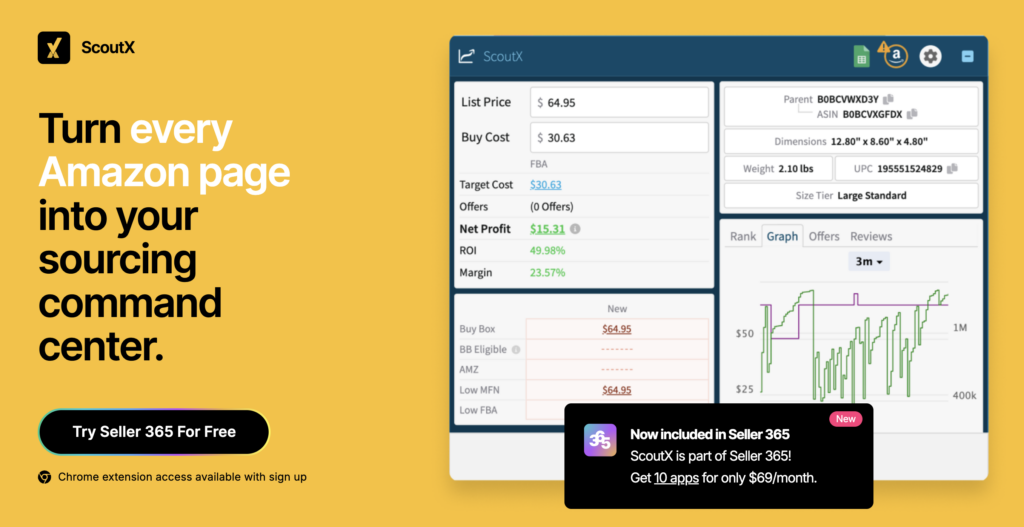
For deeper competitor discovery, tools like ScoutX transform any Amazon product page into a competitive intelligence center. See competitor pricing, sales rank, and variation data instantly as you browse, without switching between tabs or losing your research flow.
Essential competitor data to track
Product listings reveal competitive positioning through titles, bullet points, images, and A+ content. Strong competitors optimize titles with primary keywords while maintaining readability. Their bullet points balance benefit-focused messaging with search-friendly language. Image strategies show how they highlight features, demonstrate use cases, and stand out in search results.
Pricing patterns expose strategic thinking behind competitor moves. Track their list prices, promotional frequency, bundle offerings, and coupon usage. Some competitors change prices reactively to match others, while strategic players use time-based pricing or seasonal adjustments to maximize margins.
Keyword rankings determine organic visibility and traffic potential. Understanding which search terms drive competitor sales reveals gaps in your own strategy and opportunities to capture market share through better optimization.
Sales volume estimates and Best Seller Rank (BSR) fluctuations show competitor performance over time. These trends help forecast demand, identify seasonal patterns, and time your inventory pushes when competitors face stock shortages.
Customer feedback analysis uncovers competitor strengths and vulnerabilities. Review patterns show what customers love and hate, while Q&A sections reveal common pre-purchase concerns. This intelligence guides your listing improvements and customer education strategy.
How to track your Amazon market share
Market share on Amazon revolves around search visibility, Buy Box ownership, and sales volume relative to competitors. Your BSR within specific categories provides a snapshot of performance, but true market understanding requires tracking multiple competitors’ rankings simultaneously.
Sales volume estimation becomes possible through tools that analyze BSR movements, pricing changes, and competitor data patterns. While exact numbers remain estimates, consistent tracking reveals relative performance trends and market shifts.
You can calculate your approximate market share by comparing your estimated monthly sales against the combined sales of your top 10-15 competitors. This ratio changes as new competitors enter or existing ones optimize their strategies.
Meanwhile, seasonal analysis prevents surprises by showing how your share fluctuates throughout the year. Some competitors may dominate during peak seasons while others excel in off-periods. Understanding these cycles helps with inventory planning and promotional timing.
Strategies to outperform your competitors
- Listing optimization gains immediate advantages when informed by competitor gaps. If competitors use weak titles with poor keyword integration, your optimized title captures traffic they miss. Strong bullet points that clearly communicate benefits while competitors focus on features can dramatically improve conversion rates.
- Strategic pricing requires understanding competitor positioning rather than simply matching their numbers. Price below budget competitors while emphasizing superior quality, or price above them while highlighting premium features. The key is justifying your position through better listings and customer experience.
- Keyword strategies win when you target terms competitors ignore or rank poorly for. Long-tail keywords with good search volume but weak competition can drive qualified traffic at lower costs than fighting for oversaturated terms.
- Customer service and fulfillment improvements create sustainable advantages that competitors can’t easily copy. Faster shipping, better packaging, responsive support, and proactive communication build loyalty that survives price wars.
- Product development informed by competitor reviews transforms customer complaints into your competitive advantages. If multiple competitors receive criticism for the same issue, solving that problem in your product creates instant differentiation.
Tools and automation for competitor analysis
Manual competitor tracking consumes hours while missing critical updates that happen between your research sessions. Automated solutions provide continuous monitoring with instant alerts when opportunities arise.
Like we mentioned earlier, ScoutX delivers comprehensive competitor data directly on Amazon product pages. See profit potential, analyze variations, and track competitor pricing without leaving your browser or juggling multiple tools.
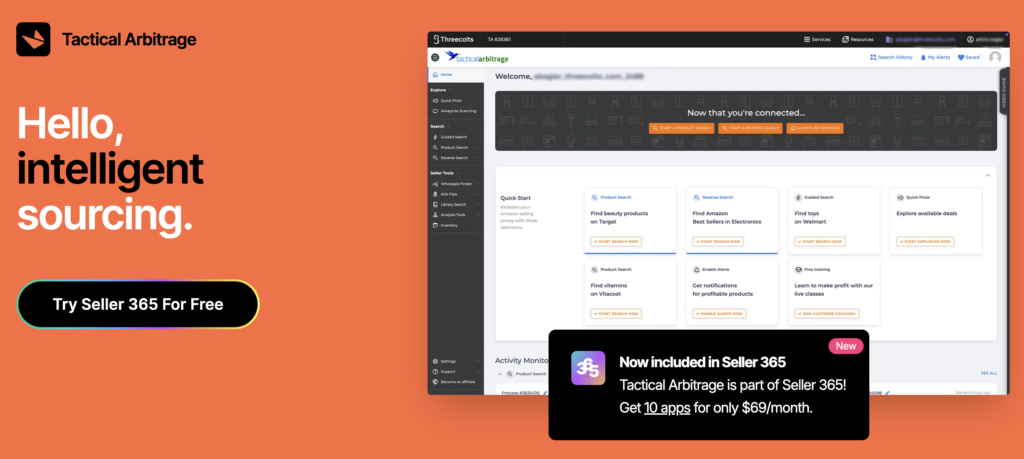
There’s also Tactical Arbitrage. This tool goes beyond basic competitor analysis through its powerful search capabilities across multiple marketplaces. Find products your competitors are selling, analyze their pricing strategies, and discover profitable opportunities they might have missed.
Automation handles routine monitoring while you focus on strategic decisions. Instead of manually checking competitor prices daily, alerts notify you of significant changes. Rather than tracking BSR fluctuations in spreadsheets, automated tools chart trends and highlight anomalies.
Your competitive advantage starts now
Amazon competitor analysis transforms reactive sellers into strategic players who control their market position. The process requires systematic research, consistent monitoring, and strategic implementation—but the payoff appears in higher rankings, better margins, and sustainable growth.
Your 30-day action plan starts with identifying your top 10 competitors and analyzing their listings, pricing, and keyword strategies. Month two focuses on implementing improvements based on their gaps and customer feedback. Month three establishes ongoing monitoring systems to maintain your competitive edge.
The sellers who dominate Amazon tomorrow are conducting competitor analysis today. Every day you delay gives competitors more time to study your strategies and develop countermoves.
Ready to turn competitor intelligence into marketplace dominance? Try Seller 365 free for up to 14 days and get ScoutX, Tactical Arbitrage, and eight other essential tools that transform guesswork into winning strategies.