
 Margin Pro
 Retail 365
 AI Operator
 Seller 365
 UniCon
 Onsite Support


 Blog
Blog What is Amazon Warehousing and Distribution (AWD)?
AWD is Amazon’s bulk storage and auto-replenishment system, and it’s changing how sellers manage inventory.

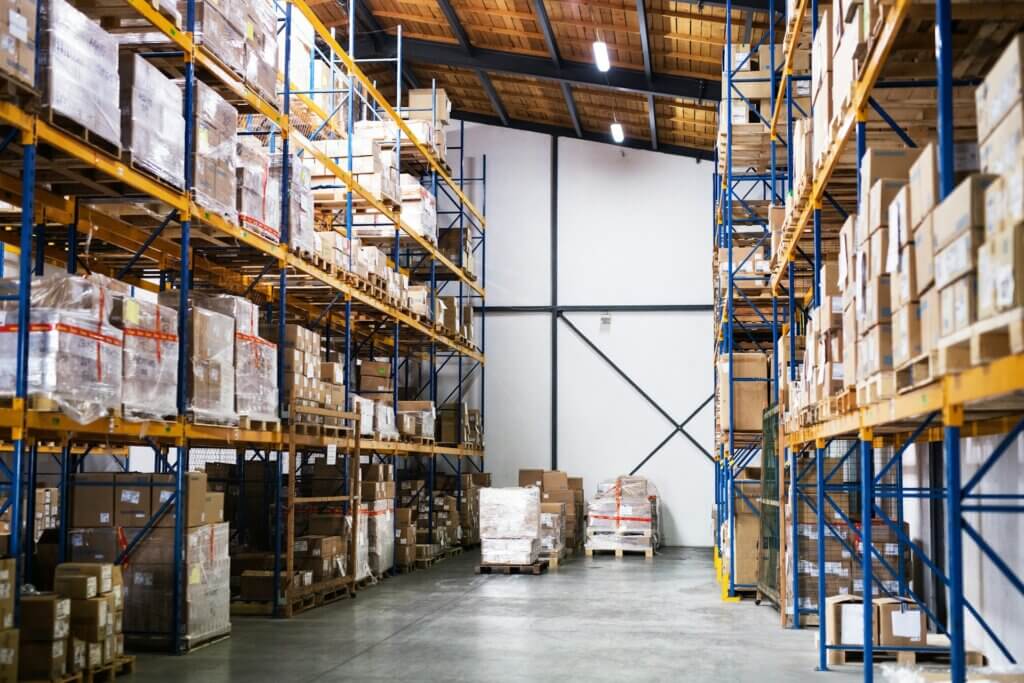
Amazon Warehousing and Distribution is Amazon’s low-cost bulk storage service that holds your inventory upstream before automatically distributing it to FBA fulfillment centers and other sales channels. Think of AWD as the staging area where your products wait before their performance in Amazon’s fulfillment network.
The fundamental difference between AWD and Fulfillment by Amazon lies in their optimization strategies. FBA fulfillment centers optimize for speed—products are scattered across multiple locations for rapid picking, packing, and shipping. AWD facilities optimize for bulk storage efficiency, keeping your inventory in master case quantities until demand signals trigger replenishment.
Auto-replenishment powers the entire AWD system. Amazon’s proprietary algorithms monitor your FBA inventory levels, analyze sales velocity, and automatically trigger shipments from AWD to keep your products in stock. This happens without your intervention, eliminating the guesswork and manual work of inventory management.
The service operates exclusively in the US marketplace for now, serving as Amazon’s answer to the complex logistics challenges facing modern ecommerce sellers.
The key benefits of Amazon AWD
Slash your storage costs immediately
AWD’s base storage rate starts at $0.48 per cubic foot per month, which is already competitive compared to many 3PL providers. But the real savings come through qualifying for discounted rates. Smart Storage rates drop to $0.43 per cubic foot (10% off), while Amazon Managed rates hit $0.38 per cubic foot (20% off base pricing).
Traditional 3PL storage often costs $0.80-$1.20 per cubic foot monthly, making AWD’s pricing compelling even at base rates. Factor in the absence of seasonal surcharges—a major pain point during Q4—and the cost advantage becomes substantial.
For perspective, a seller storing 1,000 cubic feet monthly would pay approximately $1,000 with a typical 3PL versus $380-$480 with AWD, depending on rate qualification. That’s $6,240-$7,440 in annual savings – money better invested in inventory than storage fees.
Say goodbye to FBA capacity limits forever
FBA storage limits have tortured sellers for years, forcing difficult decisions about which products to prioritize during peak seasons. AWD eliminates this constraint entirely through its auto-replenishment system.
When you enable auto-replenishment, Amazon considers your products “in stock” the moment they arrive at AWD facilities. Your Buy Box eligibility and search ranking aren’t affected by the bulk storage location. Amazon’s algorithms handle the complex logistics of moving inventory to FBA facilities based on demand patterns.
This means you can send massive quantities to AWD without worrying about hitting FBA limits. Stock up for holiday seasons, take advantage of bulk purchasing discounts, or simply maintain deeper inventory levels for peace of mind.
Additional FBA fee exemptions for qualified SKUs:
- Low-inventory-level fees: Waived when auto-replenishment ratio exceeds 70%
- Storage utilization surcharges: Don’t apply to properly managed AWD inventory
- Aged inventory surcharges: Eliminated for products stored 181-365 days when auto-replenishment criteria are met
Distribute everywhere from one inventory pool
AWD connects to multiple sales channels through its Multi-Channel Distribution (MCD) service. Send inventory to Walmart Fulfillment Services, ship direct-to-consumer orders, or fulfill orders from other marketplaces—all from the same inventory pool stored at AWD.
This multi-channel capability eliminates the need to maintain separate inventory stocks for different sales channels. Your investment in inventory serves multiple revenue streams simultaneously, improving capital efficiency and reducing stockout risks.
The system automatically prioritizes Amazon orders while still serving other channels based on your preferences. You maintain control over allocation rules while benefiting from simplified inventory management across your entire selling operation.
Automate your inventory management completely
AWD’s auto-replenishment system removes the guesswork from inventory planning. Amazon’s data science models analyze historical sales patterns, seasonal trends, and current demand signals to determine optimal replenishment timing and quantities.
The system adapts to your business patterns over time, learning from sales fluctuations and adjusting its algorithms accordingly. Promotional campaigns, seasonal spikes, and other demand variations are factored into replenishment decisions automatically.
Amazon AWD pricing breakdown
Understanding AWD’s pricing structure is crucial for calculating potential savings and optimizing your storage strategy. Amazon uses a three-tier system that rewards sellers who fully embrace the automated approach.
Base rate
The base rate applies when you manually manage replenishments from AWD to FBA facilities. You’ll pay $0.48 per cubic foot monthly for storage, $1.35 per box for inbound and outbound processing, and $1.15 per cubic foot for transportation.
This pricing tier essentially penalizes sellers who want to maintain manual control over inventory flows. Amazon clearly incentivizes the adoption of its automated systems through this pricing structure.
Smart storage rate
Smart Storage rates offer 10% savings on storage costs ($0.43 vs. $0.48 per cubic foot) for sellers who meet specific criteria. To qualify, your SKU must achieve:
70% auto-replenishment ratio: At least 70% of your SKUs’ inventory movements from AWD to FBA must happen through auto-replenishment over the preceding 90 days.
70+ days combined historical supply: Your total inventory across AWD and FBA must equal at least 70 days of historical demand. Amazon calculates this using both short-term (30 days) and long-term (90 days) metrics, selecting the higher value.
Most established sellers can achieve Smart Storage qualification with minimal operational changes, making this the practical target for AWD adoption.
Amazon managed rate
The deepest discounts (20% off storage, 10% off transportation) come through Amazon’s fully managed service. You’ll pay $0.38 per cubic foot for storage and $1.04 per cubic foot for transportation.
This tier requires enrolling in Supply Chain by Amazon’s managed service, giving Amazon greater control over your inventory decisions. The additional savings reflect Amazon’s preference for managing the entire supply chain process.
Regional pricing changes coming in 2026
Starting January 15, 2026, Amazon will implement differential pricing between regions. West Coast storage will cost $0.57 per cubic foot at base rates versus $0.48 for other regions. Processing fees will increase slightly to $1.40 per box across all regions.
These changes reflect Amazon’s real estate and labor cost differences across the country. Sellers should factor these increases into long-term planning, though the pricing remains competitive with third-party alternatives.
Real cost comparison examples
Small seller scenario (500 cubic feet monthly):
- Traditional 3PL: $500-600/month
- AWD Base rate: $240/month
- AWD Smart rate: $215/month
- AWD Managed rate: $190/month
- Annual savings: $3,120-$4,920
Medium seller scenario (2,000 cubic feet monthly):
- Traditional 3PL: $2,000-2,400/month
- AWD Base rate: $960/month
- AWD Smart rate: $860/month
- AWD Managed rate: $760/month
- Annual savings: $12,480-$19,680
Large seller scenario (5,000 cubic feet monthly):
- Traditional 3PL: $5,000-6,000/month
- AWD Base rate: $2,400/month
- AWD Smart rate: $2,150/month
- AWD Managed rate: $1,900/month
- Annual savings: $37,200-$49,200
How to enroll in Amazon AWD
Enrollment couldn’t be simpler for eligible sellers. Navigate to your Seller Central inventory menu and select “Warehousing and Distribution (AWD).” Users with primary account access get automatically enrolled just by visiting the program page.
The system displays your enrollment status immediately. You’ll see options to create shipments, manage existing inventory, and access reporting tools. No applications, waiting periods, or approval processes slow down the getting started.
You only pay when you actually send inventory to AWD facilities. No upfront fees, monthly minimums, or long-term commitments lock you into the service. This pay-as-you-go approach reduces risk for sellers testing the platform.
Product eligibility requirements
AWD accepts most standard FBA products but maintains specific restrictions to ensure operational efficiency and safety compliance.
Eligible categories include:
- Apparel and accessories
- Automotive and powersports parts
- Baby products (excluding certain items)
- Beauty products (with restrictions)
- Books and media
- Camera and photo equipment
- Consumer electronics (brand restrictions apply)
- Health and personal care
- Home and garden products
- Sports and outdoor equipment
- Tools and home improvement
- Toys and games
Categories AWD won’t accept:
- Amazon devices and gift cards
- High-value products requiring special handling
- Jewelry and watches (fine jewelry excluded)
- Meltable products, including chocolate, gummies, and wax-based items
- Refrigerated goods requiring cold storage
- Dangerous goods and hazmat materials
- Collectibles with limited application windows
Size and weight restrictions:
- Maximum 25 inches on any side for individual units
- Weight limit of 50 pounds per unit
- Boxes must be conveyable through Amazon’s automated systems
Special handling for expiration-dated products
AWD handles perishable and expiration-dated products with specific timing requirements to ensure product quality and regulatory compliance.
Inbound requirements: Products must have 185+ days until expiration when creating AWD shipments. This buffer ensures adequate time for storage and distribution through multiple channels.
FBA distribution: Items need 105+ days remaining for automatic replenishment to FBA facilities. Products with shorter expiration windows can still ship to other channels through MCD.
Automatic disposal: Items reaching expiration dates face automatic disposal if no action is taken. This protects sellers from liability while ensuring food safety compliance.
Shipment requirements and prep considerations
All AWD shipments must arrive properly boxed and labeled according to destination channel requirements. Amazon’s automation systems require consistent packaging to function efficiently.
Critical shipping requirements:
- All items must arrive in boxes – no loose or unboxed products accepted
- Follow FBA packaging and prep standards for Amazon-bound inventory
- Apply correct product labels before shipping (no relabeling services available)
- Use proper box dimensions for accurate fee calculations
Prep service integration: You can use FBA Label Service for enrolled products, with fees charged when items reach FBA facilities rather than at AWD. This simplifies prep requirements while maintaining cost efficiency.
When does AWD make perfect sense?
AWD delivers maximum value for sellers with predictable demand patterns and significant inventory volumes. High-velocity products benefit most from automated replenishment since the algorithms have more data points for optimization.
Ideal AWD candidates:
- Monthly storage costs exceeding $1,500 with traditional 3PLs
- Frequent FBA capacity limit constraints
- Seasonal products requiring early inventory positioning
- Multi-channel sellers serving Amazon and other marketplaces
- Sellers who want to eliminate manual inventory management
Seasonal businesses particularly benefit from AWD’s lack of surge pricing. Send holiday inventory to AWD in July, pay consistent rates through December, and let auto-replenishment handle the complex Q4 logistics automatically.
Not every seller benefits from AWD’s bulk storage and automation approach. Several business characteristics suggest alternative solutions might work better. For example:
- Monthly sales under 100 units per SKU
- Frequent promotional pricing requiring rapid inventory adjustments
- Products requiring tight expiration date management
- Preference for hands-on inventory control
- Limited budget for maintaining 70+ days of combined inventory
New sellers often struggle with AWD’s minimum inventory requirements. The 70-day supply qualification means tying up significant capital before achieving cost savings. Consider building sales velocity through direct FBA shipping before transitioning to AWD.
Stop fighting your inventory and start scaling your business
Amazon Warehousing and Distribution transforms inventory management from a daily headache into a strategic advantage. The combination of bulk storage savings, automated replenishment, and multi-channel distribution creates the operational foundation needed for sustainable growth.
Ready to eliminate inventory headaches and ALSO streamline your entire Amazon operation? Try Seller 365 free for up to 14 days and discover how tools within the bundle, like InventoryLab, optimize your prep and shipping workflows while AWD handles bulk storage automatically. Your future self will thank you for making the switch.